


全球IT供应链
国际运输+IT运维外包+自营骨干网
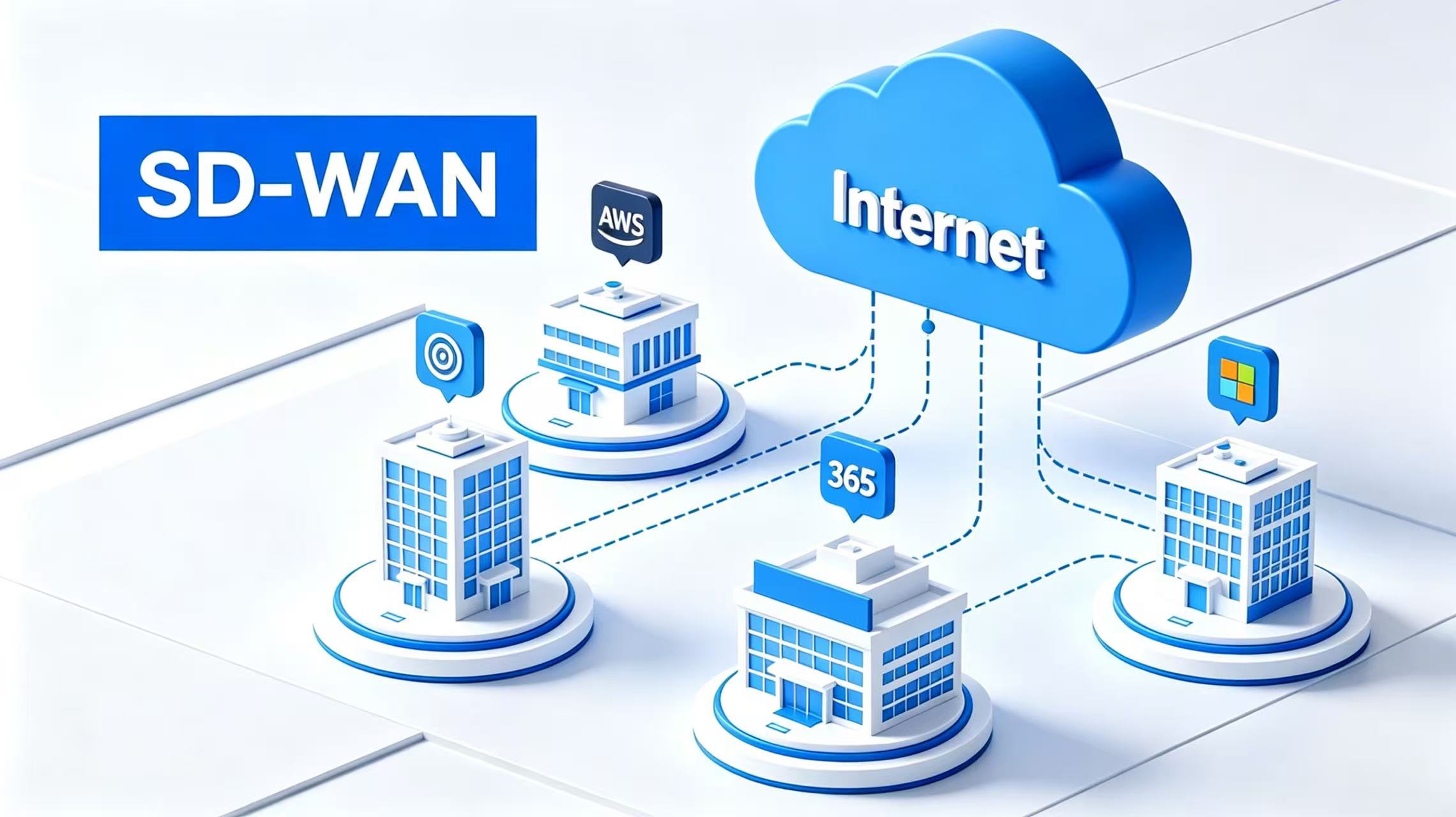
Today's enterprises run on cloud applications, but the networks connecting them often lag behind. As teams depend on Microsoft 365, Zoom, and AWS, legacy WANs buckle under high costs and sluggish cloud access. That’s where SD-WAN comes in, promising a smarter, more agile way to build wide area connectivity. But what exactly is SD-WAN, and why are so many IT leaders restructuring their networks around it?
SD-WAN, or Software-Defined Wide Area Network, is a software-driven approach to managing enterprise connectivity across multiple transport links—such as MPLS, broadband internet, and LTE. Instead of tying traffic to rigid hardware-defined paths, SD-WAN uses a centralized controller to apply application-aware policies across the entire network. In simple terms, it automatically chooses the best available path for each application based on real-time conditions like latency and packet loss, ensuring voice calls stay crisp and cloud apps remain responsive without manual intervention.
Traditional WAN architectures were designed for hub-and-spoke networks. Traffic from branch offices must first be routed back to a central data center before accessing the internet, a model that is difficult to sustain in modern cloud-first operating models. Common challenges include:
● High MPLS costs: Private circuits are expensive, especially when bandwidth demands rise.
● Poor cloud performance: Backhauling adds latency, undermining SaaS and IaaS responsiveness.
● Complex branch management: Each site requires device-by-device configuration, often via CLI.
● Slow site deployment: Provisioning new locations can take weeks or months due to carrier lead times.
These limitations drive the need for a more flexible, cost-effective WAN architecture.
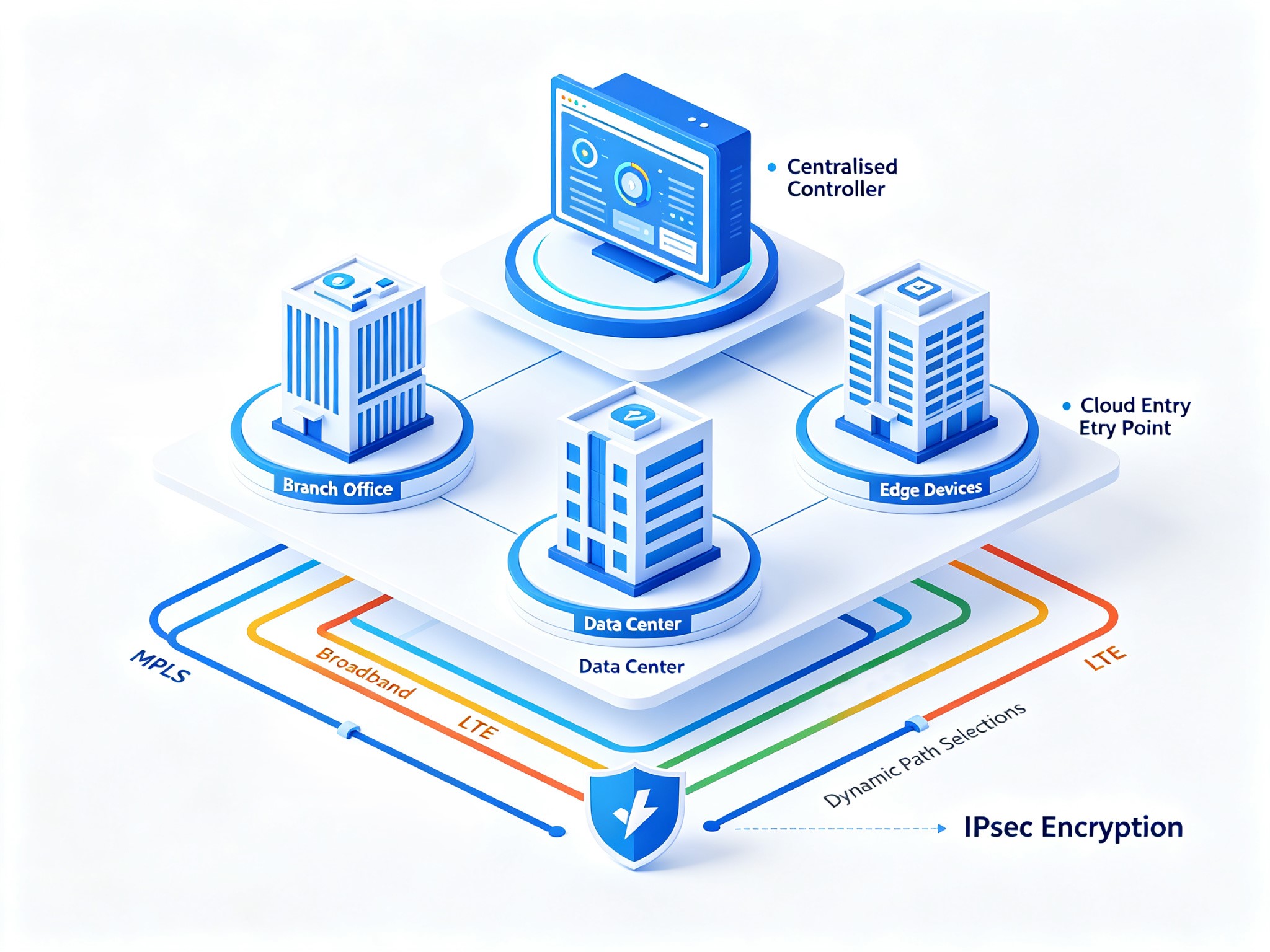
● Acts as the brain of the network, managed from a single dashboard.
● IT teams define application priorities, security policies, and routing rules once, then push them to all sites automatically.
● Physical or virtual appliances deployed at branches, data centres, and cloud entry points.
● Execute centrally defined policies and continuously monitor link performance—latency, jitter, and packet loss.
● Traffic is steered in real time to the best available link based on current network conditions.
● Latency-sensitive applications like voice or video are automatically prioritised over less critical traffic.
● Secure IPsec tunnels are established across any transport—MPLS, broadband, or LTE.
● If a link degrades or fails, critical sessions are rerouted to a healthy connection in seconds without interruption.
Broadband links can supplement or replace expensive MPLS circuits, dramatically reducing monthly WAN expenses.
Application-aware routing prioritizes latency-sensitive traffic, delivering a stable experience for video conferencing and cloud suites.
A centralized interface enables policy changes, security updates, and monitoring across all locations without site-by-site engineering.
Local internet breakout at the branch routes SaaS and IaaS traffic straight to the cloud, slashing latency.
New sites can be brought online quickly via zero-touch provisioning, pulling configurations from the controller automatically.
While MPLS delivers predictable private-line quality, it lacks the agility that modern enterprises require. SD-WAN offers a compelling alternative, and many organizations adopt a hybrid model that blends both.
| Feature | SD-WAN | MPLS |
| Cost | Lower, leverages broadband | High, dedicated private circuits |
| Cloud connectivity | Direct, policy-driven breakout | Typically requires backhauling |
| Deployment speed | Hours or days with zero-touch | Weeks to months |
| Traffic management | Application-aware, dynamic | Static, class-of-service based |
| Management | Centralized software dashboard | Hardware-centric, often CLI |
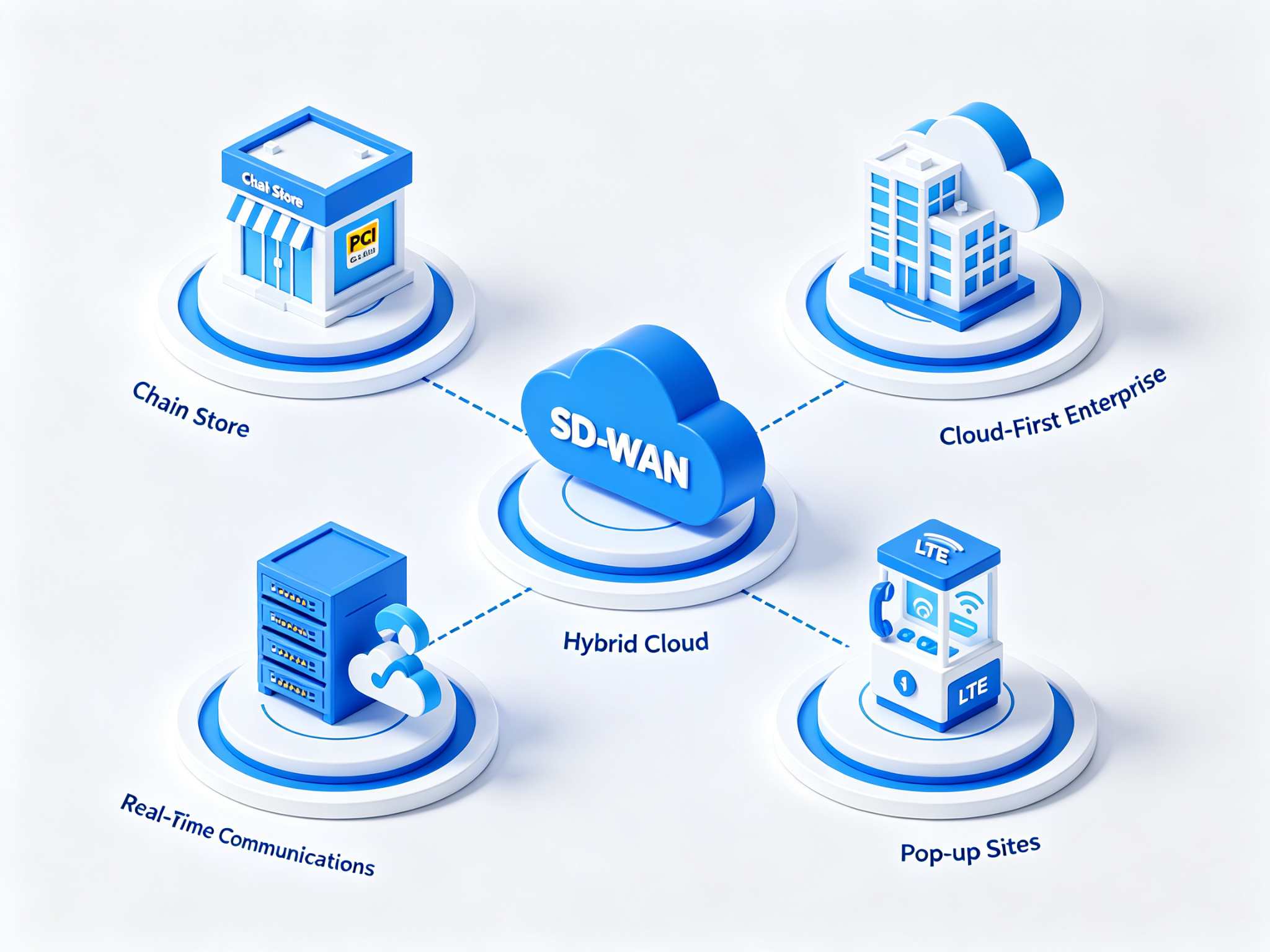
Securely connecting hundreds of branch locations is a core SD-WAN strength. It enables PCI-compliant network segmentation, centralised policy management, and direct cloud access while reducing dependency on expensive MPLS circuits across each site.
Organisations heavily invested in AWS, Azure, and SaaS platforms use SD-WAN to bypass the traditional backhaul bottleneck. Local internet breakout at each branch provides low-latency, optimised cloud connectivity, significantly improving application performance.
SD-WAN enforces consistent security and routing policies across on-premises data centres and public cloud workloads. This unified WAN architecture simplifies hybrid cloud networking and ensures compliance without adding complexity.
Applications like Microsoft Teams, Zoom, and VoIP demand stable, low-latency paths across distributed offices. SD-WAN applies application-aware routing and dynamic path selection to prioritise real-time traffic, preserving call quality even during peak network usage.
For pop-up stores, temporary offices, or remote kiosks, SD-WAN enables zero-touch deployment over LTE or broadband. New sites are brought online in minutes, making enterprise-grade SD-WAN connectivity instantly scalable without waiting for fixed-line installations.
Modern SD-WAN solutions embed robust security features that once demanded separate appliances. End-to-end encryption, stateful firewall capabilities, and secure IPsec tunnels are commonly integrated into edge devices. Many platforms also support Zero Trust principles, authenticating every session and continuously validating device posture before granting network access. This convergence reduces hardware at the branch while strengthening the overall security posture—particularly valuable for organizations subject to compliance frameworks such as GDPR or HIPAA.
OgCloud provides a managed SD-WAN service that combines centralised orchestration, integrated security, and zero-touch deployment to streamline multi-branch connectivity.
The platform supports application-aware routing and dynamic path selection, ensuring stable performance for cloud applications and real-time communication across distributed sites. Enterprises can use OgCloud's network assessment and tailored deployment plans to simplify migration and map technical requirements directly to business outcomes.
Standard VPN only provides encrypted point-to-point connectivity, with no application identification or dynamic traffic scheduling capabilities. It is prone to lag during peak hours, requires per-site configuration, and incurs high operation and maintenance (O&M) costs. SD-WAN is a software-defined architecture that supports application awareness, dynamic path selection, automatic multi-link backup and centralized management. It also has built-in security features such as firewalls, delivering significantly better network stability and O&M efficiency.
● Retail chains: A supermarket chain deployed SD-WAN by replacing MPLS with broadband, achieving a 5x increase in per-store bandwidth and a nearly 50% reduction in monthly fees, with 99.99% uptime for POS transactions and video conferencing.
● Cross-border manufacturing: After deployment at a multinational machine tool enterprise, cross-facility production instruction latency dropped from 420ms to 98ms, quality inspection video backhaul speed increased by 77%, and O&M costs fell by 50%.
● Financial securities: China Post Securities realized minute-level branch rollout via SD-WAN, cutting O&M workload by 95%. The availability of trading and market data services reached 99.99%, meeting classified protection compliance requirements.
● Cross-border e-commerce: After SD-WAN deployment across 500+ stores of a Southeast Asian retail enterprise, headquarters data transfer speed tripled, POS transaction success rate rose to 99.99%, and annual network costs decreased by 40%.
Zero Touch Provisioning (ZTP) is a core capability of SD-WAN. Devices are pre-configured before delivery. For branch sites, simply power on the device and connect it to the network — it will automatically connect to the cloud controller, download configurations and go live. No on-site professional IT staff is required, enabling minute-level site activation.
SD-WAN costs far less than traditional MPLS leased lines, with an overall cost reduction of 30%–50%. It leverages low-cost links such as broadband and 5G to replace leased lines, and centralized management also reduces O&M investment. It supports per-site subscription and on-demand scaling.
SD-WAN has reshaped enterprise networking by replacing rigid, cost-heavy WAN models with intelligent, software-driven connectivity. It lowers costs, enhances cloud application performance, and streamlines branch management—making it a foundational component of modern digital infrastructure.
If you would like to learn more about SD-WAN and how it can drive your business transformation, consult an expert today to get a solution.